


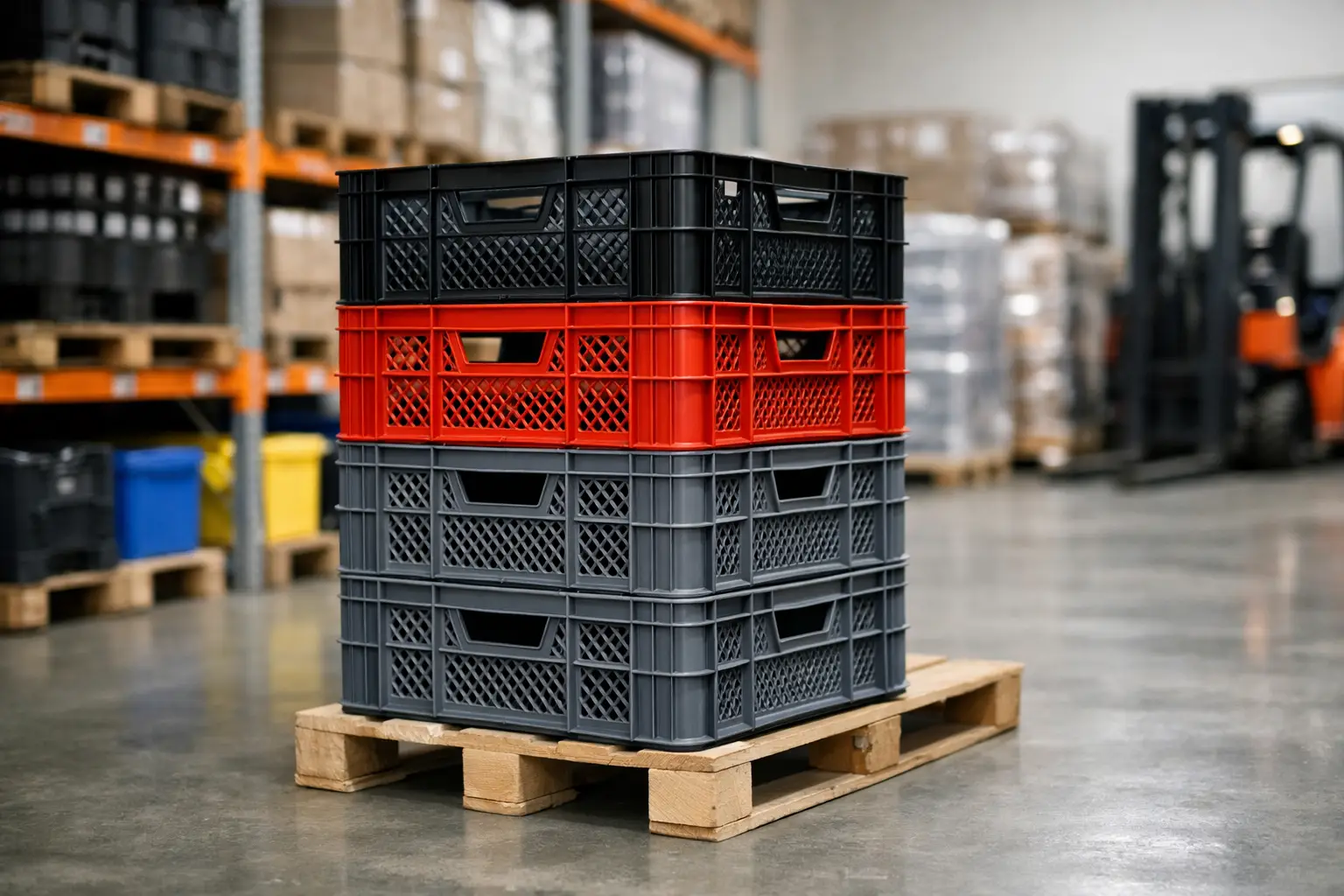
In a warehouse, the problem is rarely just space. It’s usually how it’s utilized. Stacking crates for warehouses don’t merely serve as organizational tools. They influence picking speed, stacking stability, content protection, and ultimately the operational cost of a facility.
When selection is made carelessly, errors quickly emerge. One crate doesn’t fit properly on another, the stack loses alignment, contents are compressed, and handling becomes slower. Conversely, when selection is based on load, dimensions, material, and usage conditions, the warehouse achieves a clearer flow and fewer time losses.
What Stacking Crates for Warehouses Must Do Correctly
In a professional environment, a crate must first be durable. This sounds obvious, but durability doesn’t just mean it doesn’t break. It means it maintains its form under load, doesn’t deform during repeated stacking, and remains stable during daily handling.
The second critical point is stacking geometry. Proper construction allows for secure contact between crates, without shifts. This is particularly important in warehouses with frequent transfers, whether by trolley or pallet, where vibrations are part of daily operations.
The third point is adaptation to the application. A food warehouse has different requirements than an industrial environment with spare parts, or a distribution center with high-speed order preparation. There isn’t one crate that fits all situations in the same way.
How to Choose the Right Stacking Crates for Warehouses
The correct selection begins with the type of product to be stored. If it involves small components, consumables, or items with a consistent weight, the focus is usually on ergonomics and easy access. If it involves heavier materials, the priority shifts to load-bearing capacity and the crate’s behavior when fully stacked.
Dimensions play a larger role than they might seem. A crate that is slightly taller or wider than ideal can reduce shelf utilization, create gaps on pallets, or make handling difficult for operators. Therefore, selection must be based on the available footprint, shelf height, and how products will be picked.
Equally important is the weight per crate and the total weight per stack. Many products appear adequate when half-full, but their behavior changes under full load. This is where the quality of the raw material and the proper design of the walls and base become evident.
Construction Material and Usage Conditions
In most professional applications, plastic crates are the most practical choice because they offer a good combination of durability, ease of cleaning, and low weight. However, even here, one solution does not fit all cases. The quality of the plastic, impact resistance, and behavior at low or high temperatures directly affect lifespan.
In environments with increased hygiene requirements, such as food and beverages, priority is given to material suitability and ease of washing. Smooth surfaces and proper design without areas that trap residues facilitate cleaning and limit operational risks.
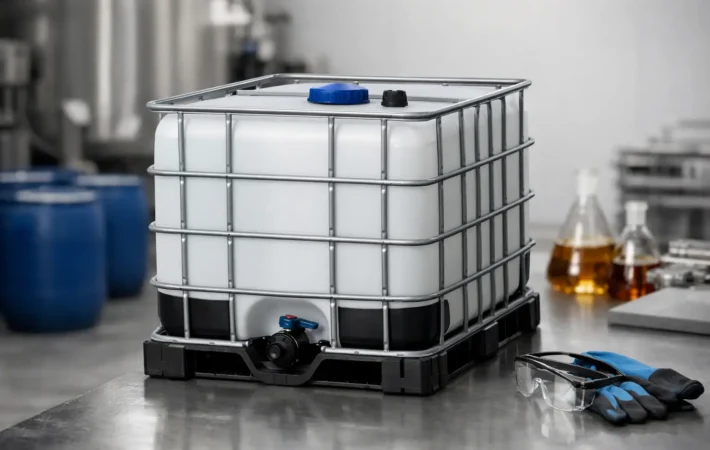
In industrial use, where oils, lubricants, or chemicals are present, the crate’s compatibility with the substances it comes into contact with must be checked. A crate that performs excellently with dry cargo does not necessarily mean it is suitable for a more demanding chemical environment. In such cases, certification and technical specifications are of substantial value.
Open or Closed Walls?
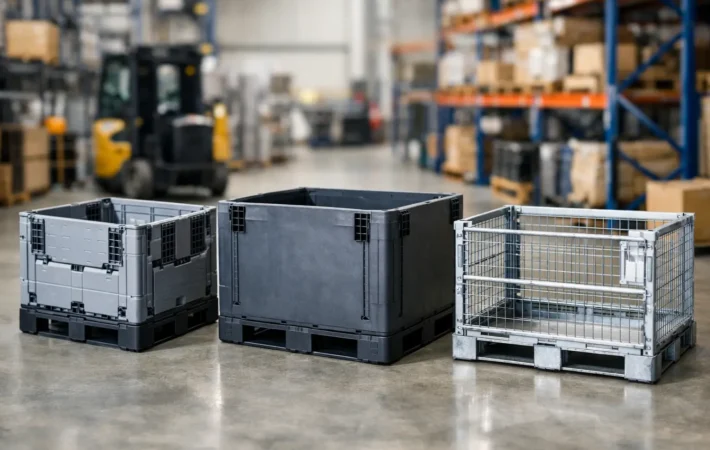
The choice between open and closed designs depends on the use. Open walls reduce weight and aid ventilation, which can be useful in certain food applications or for products that should not trap moisture. On the other hand, they offer less protection from dust and microparticles.
Closed walls are better suited when content protection and clean, more controlled storage are desired. They often serve better on organized shelves, in production areas, or for handling items that should not be exposed. The trade-off is that the crate’s own weight may increase, or visual identification of contents may be limited if there is no proper labeling.
Stacking, Transport, and Ergonomics
Stable stacking is not just a matter of safety. It’s also a matter of productivity. When operators don’t constantly have to correct stacks or worry about load shifts, flows become faster and more predictable.
Ergonomics also play a crucial role. Handles, height, access to contents, and easy handling during lifting make a difference in tasks that are repeated many times throughout the day. In a picking environment, small ergonomic improvements translate into less fatigue and better execution consistency.
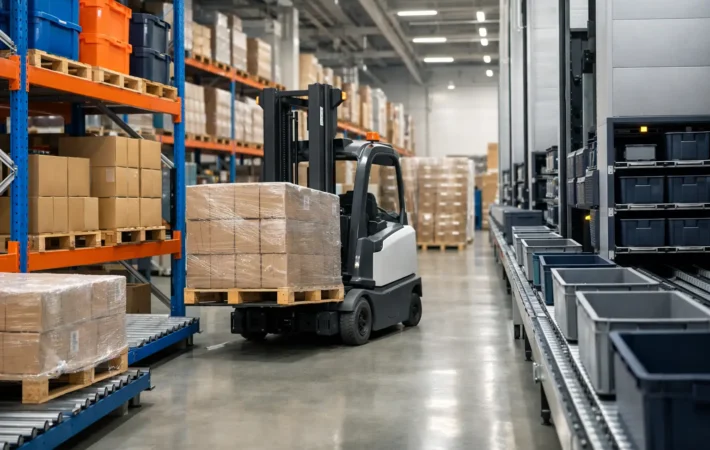
If crates are moved on pallets or with wheeled equipment, their behavior under vibration must also be considered. In practice, secure static stacking is not enough. The goal is for it to remain stable during transport within the facility.
Where Mistakes Are Most Often Made
One of the most common mistakes is purchasing based solely on unit price. At first glance, this seems logical, especially for large quantities. However, if the crate has a shorter lifespan, lower durability, or poor compatibility with warehouse flow, the total cost of ownership increases.
Another common mistake is underestimating stacking height. A facility might operate smoothly with two or three levels but show instability at five or six. Therefore, actual usage conditions must precede the order and not be examined retrospectively.
An error also occurs when standardization is not taken into account. If many incompatible dimensions coexist within the same warehouse, space utilization becomes more difficult, and internal organization loses consistency. In many cases, fewer crate codes with a more appropriate selection perform better than a mix of many types.
In Which Applications Do They Perform Best?
Stacking crates are particularly efficient in spare parts warehouses, production lines, logistics hubs, food wholesale, retail support, and backroom areas. Where clear categorization, quick identification, and secure storage by SKU are needed, they offer an operational advantage that is immediately visible in daily work.
In food businesses, the right choice helps not only with organization but also with hygienic management. In industrial environments, it supports better material classification, WIP storage, and safer internal transport. In commercial businesses, it reduces search time and improves order fulfillment accuracy.
That’s why their value is not measured only in liters or dimensions. It is measured by how consistently they support operations without wear, failures, and unnecessary handling.
What to Check Before Final Selection
Before proceeding, you need a clear picture of four practical elements: the type of load, the weight per unit, the stacking height, and the environmental conditions. If one of these is missing, the choice becomes more uncertain and usually leads either to over-dimensioning or to a solution that doesn’t last as long as it should.
It is also worth considering whether you need uniformity with other warehouse equipment, such as pallets, shelves, or trolleys. Compatibility in dimensions and handling reduces friction in daily operations. For many businesses, this detail is what ultimately makes the investment more efficient.
Pack Markt addresses precisely this logic of selection: solutions for professional use, with an emphasis on durability, safety, and correct application. Because in the warehouse, the right crate is not just a container. It is part of the infrastructure that keeps operations stable every day.
Leave a comment
Your email address will not be published. Required fields are marked *