


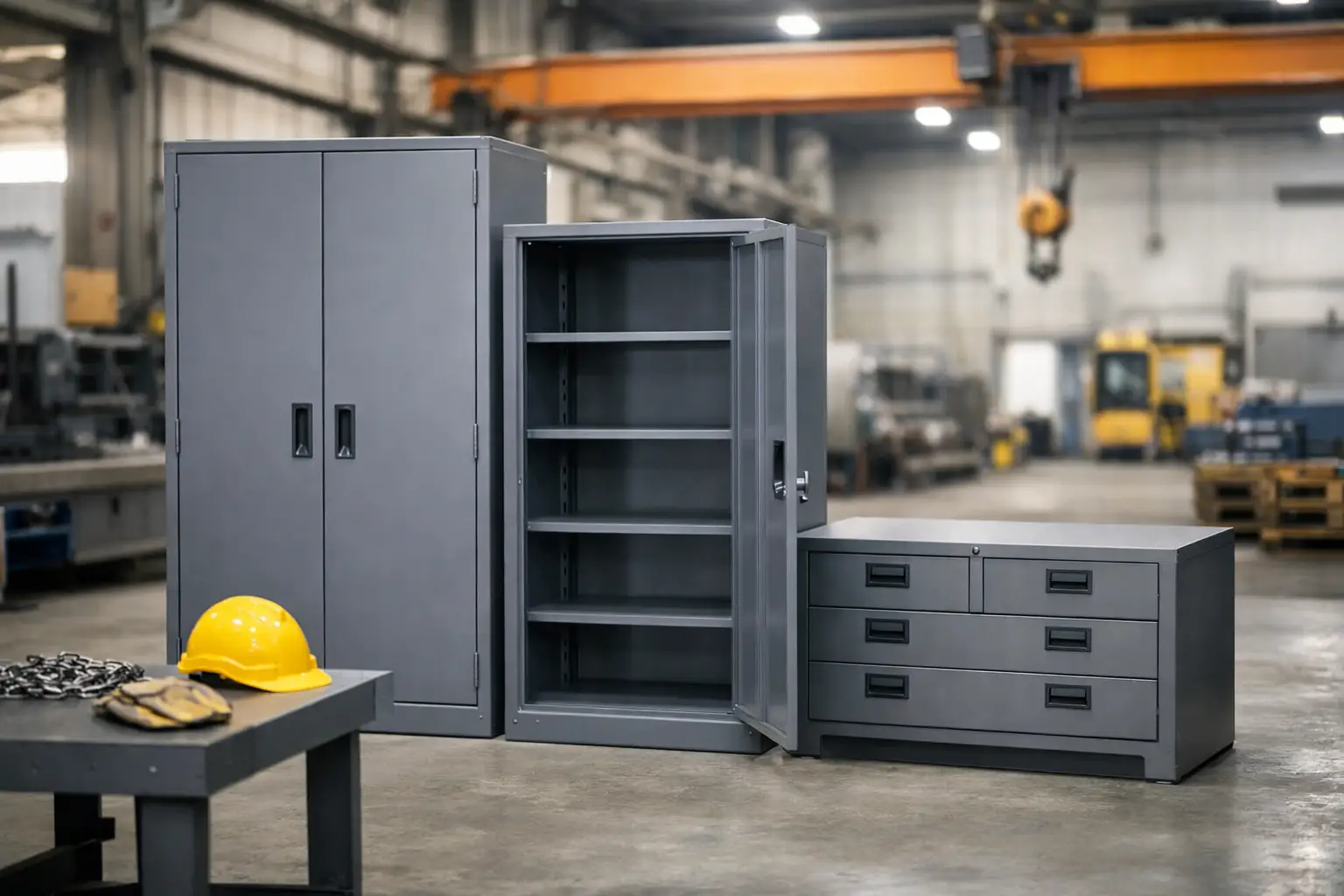
In practice, industrial metal cabinets are not merely simple storage furniture. They serve as control points for tools, consumables, personal protective equipment, chemical aids, spare parts, and critical materials that must remain organized, protected, and readily available. When daily operations depend on speed, cleanliness, and secure access, the correct cabinet choice directly impacts productivity.
In a warehouse, on a production line, or in a technical maintenance area, an unsuitable cabinet quickly becomes apparent. Doors loosen, shelves bend, the layout does not support workflow, and materials end up stacked out of place. Conversely, a properly selected metal solution helps reduce delays, damage, and unnecessary personnel movement.
Why Industrial Metal Cabinets Are Chosen
The primary reason is durability. In professional environments with frequent use, heavy loads, vibrations, and increased cleaning requirements, metal construction offers greater mechanical resistance than lighter solutions. This is important not only for the equipment’s lifespan but also for stability in daily use.
Equally important is security. A metal cabinet with a lock, reinforced doors, and proper construction restricts uncontrolled access to tools, consumables, or sensitive materials. In many areas, this is not a matter of tidiness but of compliance and internal control.
There is also the issue of hygiene. In food, beverage, or other facilities requiring frequent cleaning, smooth metal surfaces are easier to clean and better withstand repeated maintenance, provided the appropriate finish has been selected for the specific environment.
What to Evaluate Before Purchase
The first question is not about height or color. It is about what will be stored inside. A cabinet for small parts and consumables has different requirements than one for heavy tools, or for personal protective equipment or cleaning supplies. The contents determine shelf strength, door type, the need for locking, and the overall layout.
The second critical parameter is the operating environment. In a clean indoor space with low humidity, a typical metal cabinet covers many applications. In areas with dust, elevated temperatures, humidity, or chemical exposure, the paint, corrosion protection, and overall construction quality must be considered more carefully. The cheapest product can end up costing more if it deteriorates prematurely.
The third parameter is access. If the cabinet is opened dozens of times a day, you need ergonomics and durable mechanisms. If it is intended for periodic stock storage, the emphasis may be more on capacity and less on speed of access. The right product depends on the workflow, not just the dimensions of the available space.
Key Features That Make a Difference
Metal Thickness and Construction Durability
Durability is not judged solely by external appearance. The metal thickness, reinforcements at critical points, and the method of joining parts affect the cabinet’s performance in real-world use. In industrial environments where opening and closing are continuous, hinges, support points, and assembly quality are of great importance.
Shelf Load Capacity
A common mistake is to consider overall capacity while ignoring the permissible load per shelf. If metal components, containers, toolboxes, or heavy consumables are to be stored, the load-bearing capacity of each level must be clear. Overloading not only reduces the product’s lifespan but also increases the risk of accidents.
Locks and Access Control
In many facilities, locking capability is mandatory. Cabinets with reliable locks help control tools, expensive spare parts, or materials that should not be accessible to everyone. If there are shift changes or multiple user groups, the practicality of the locking system deserves special attention.
Internal Configuration
Adjustable shelves, dividers, and efficient use of height significantly improve functionality. A cabinet that does not adapt to its load often leads to wasted space or improper placement of materials. Flexibility is particularly useful in businesses where storage needs change over time.
Where They Are Most Effectively Used
Industrial metal cabinets play different roles in each department. On the production line, they keep necessary materials close at hand without cluttering the workspace. In the technical department, they organize tools, components, and maintenance materials in a way that reduces search time. In the warehouse, they serve as stable storage points for items that should not be left exposed.
In food and beverage businesses, cleanliness and clear material separation gain greater importance. In chemical or technical applications, special specifications may be required depending on the type of substances and the facility’s safety protocol. There is no one-size-fits-all solution. There is a correct matching of product and application.
Common Selection Mistakes
The first mistake is purchasing based solely on price. In industrial use, the cost of replacement, lost time, and reduced safety outweigh the difference of a better-built product. A cabinet used daily should be treated as functional equipment, not a secondary item.
The second mistake is underestimating the load. When the weight and volume of materials are not correctly calculated, the result is deformed shelves, malfunctioning doors, and rapid wear. This is common in maintenance areas and spare parts warehouses.
The third mistake is a lack of foresight for future expansion. If a unit is growing or changing codes and consumables, the capacity that seems sufficient today may not be enough in a few months. A more flexible layout often performs better in the long run.
When Special Attention Is Needed
If the cabinet is to be placed near washing areas, in spaces with increased humidity, or in an environment with chemicals, careful inspection of materials and surface protection is required. Not all paints and metals react the same way under the same conditions. In such cases, technical suitability takes precedence over aesthetics.
Also, if materials with special safety requirements are stored, the selection should not be made generally or vaguely. The internal procedures of the facility, access requirements, and safe storage rules need to be considered. For certain applications, a standard cabinet may not be sufficient.
The Commercial Value of Correct Selection
For a procurement manager or warehouse administrator, the value lies not only in purchasing a durable product. It lies in making daily operations more stable. Less search time, a cleaner space, better inventory visibility, and reduced risk of material damage or loss.
This is also why the selection of industrial equipment must be based on application criteria. Pack Markt addresses precisely this logic, where storage, internal organization, and operational durability are evaluated as part of overall business performance. When the equipment is correct, the space works better without unnecessary interventions.
The right metal cabinet not only solves the storage issue. It brings order to the workflow, supports safety, and helps the space operate consistently, which in an industrial environment matters every day.
Leave a comment
Your email address will not be published. Required fields are marked *