


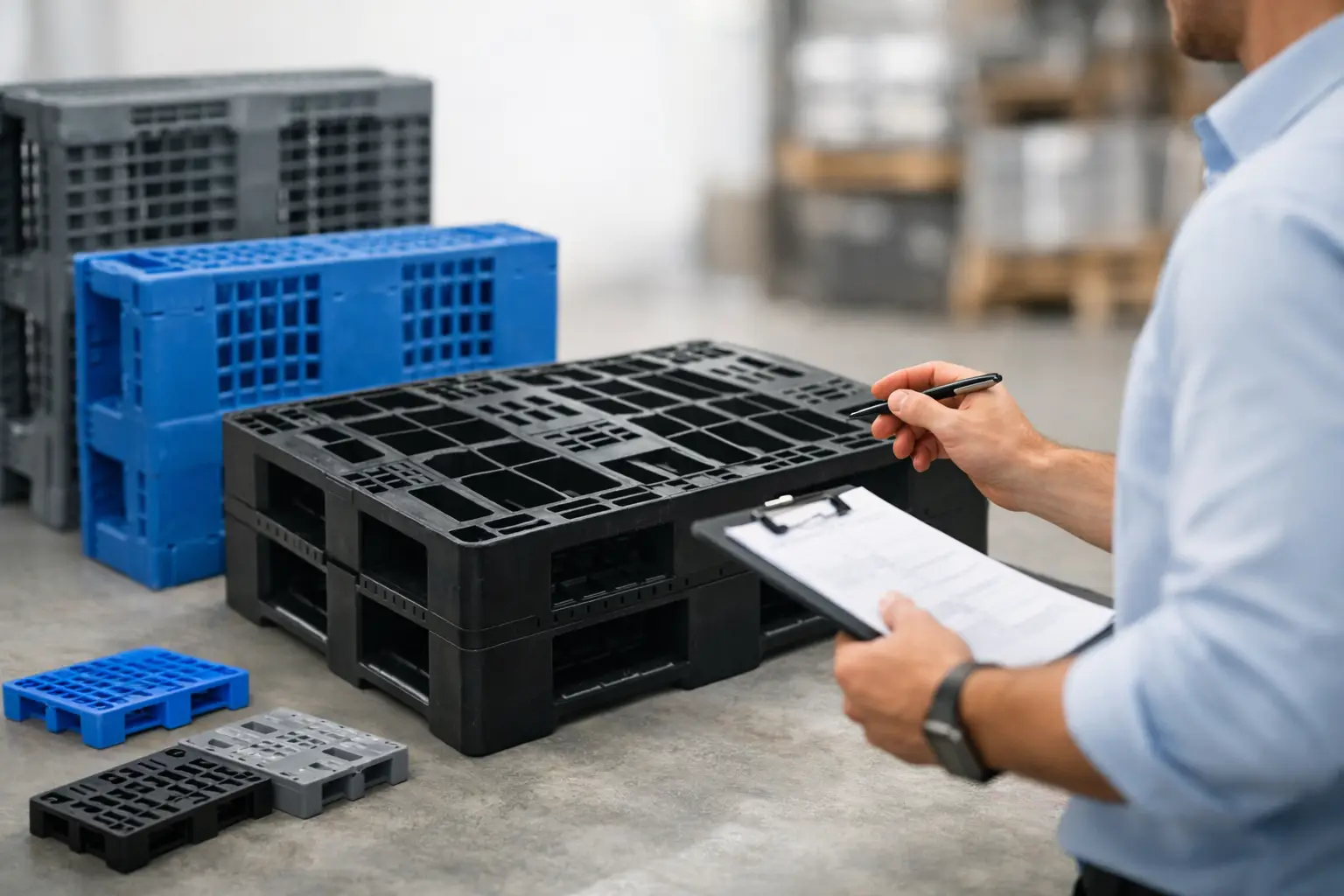
If the wrong pallet enters your warehouse flow, the cost is not only evident in its purchase. It becomes apparent through breakages, stacking instability, product damage, handling delays, and increased operational risk. Therefore, the question “how to choose a plastic pallet” is not merely about a technical specification. It concerns the overall operation of your business, from production and storage to transportation and hygiene.
The correct choice begins with the application, not the price. A plastic pallet that is perfectly suitable for internal movement in a dry environment may be unsuitable for racking, exports, food applications, or heavy loads. The goal is to match the material, dimensions, load capacity, and construction with the actual requirements of your application.
How to choose a plastic pallet based on application
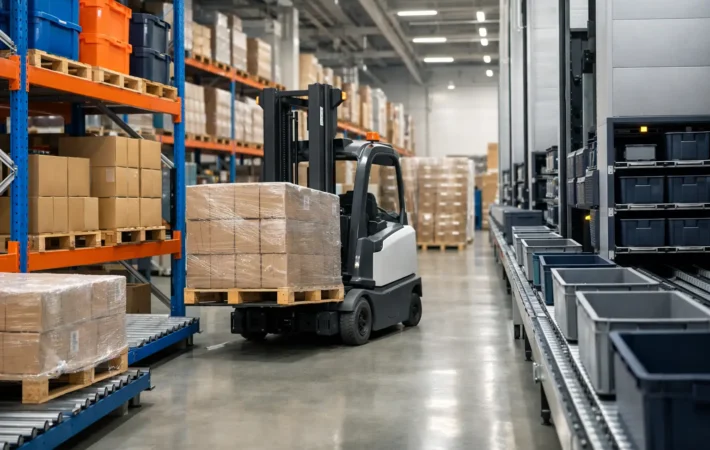
The first question is simple: where and how will it be used? A distribution center with heavy forklift traffic requires a different pallet than a food processing unit that emphasizes hygiene and easy cleaning. If the primary use is internal handling, a more economical solution with lower weight is often sufficient. However, if the pallet will be placed on pallet racks, repeatedly loaded, or travel through logistics networks, greater structural strength is needed.
In food and beverage businesses, mechanical strength is not the only criterion. Sanitary suitability, an easy-to-clean surface, and resistance to moisture, washing, and frequent use are highly important. In the chemical industry or environments with lubricants and active substances, the material’s resistance and compatibility with specific substances and conditions are crucial.
For exports, plastic pallets offer a clear advantage. They do not require heat treatment like wood and provide more stable dimensions and a lower risk of splinters, moisture, or infestation by factors that cause problems in international transport. However, this does not mean that every plastic pallet is suitable for an export cycle. Durability, weight, and the ability to stack safely remain critical.
Key specifications that make a difference
When examining technical specifications, it is not enough to look at just one load indication. You typically need to distinguish between static load, dynamic load, and racking load. These three values convey different information.
Static load refers to the pallet’s resistance when it remains stationary on the floor. Dynamic load indicates what it can withstand during movement with a pallet jack or forklift. Racking load is the most demanding, as the pallet is usually supported at two points and subjected to significant bending stresses. A pallet that performs well on the floor is not necessarily suitable for storage on racks.
Dimensions are also important. The most common options are Euro-type or industrial-type, but the correct dimension depends on the load, warehouse layout, type of racking, and compatibility with transport equipment. If you are transporting boxes, containers, or crates of a specific footprint, the pallet must properly support their base without gaps that increase instability.
The weight of the pallet itself also plays a role. A lightweight pallet reduces transport weight and is practical in distribution networks or for one-way uses. On the other hand, a heavier and more reinforced construction usually provides a longer lifespan and better performance in repeated professional use. There is no single correct answer for everyone here. There is the right balance for your specific operational cycle.
Open or closed deck?
The pallet’s surface affects both its use and hygiene. An open deck usually reduces weight and cost and performs satisfactorily in many storage and transport applications. However, when the load has a smaller footprint or requires a more stable base, a closed deck offers better support.
In environments with increased cleanliness requirements, such as food, beverages, or pharmaceutical applications, a closed and smooth surface is usually more practical for washing and more hygienically controlled. Conversely, in general warehousing or logistics, the choice is often made based on durability and life cycle cost.
The choice is not aesthetic. It is purely functional. If the pallet needs frequent washing, should not retain residues, or is used in a controlled environment, its construction must support this from the outset.
Feet or skids, and why it matters
Another often underestimated point is the pallet’s base. Plastic pallets can have feet or skids. The choice affects stacking, compatibility with transport equipment, and behavior on racks.
Pallets with feet are often practical for stacking when empty, saving space. This is useful for businesses with large returns of empty materials or limited storage space. Pallets with skids, on the other hand, usually offer better stability during movement and are more suitable for many applications involving racks or repeated handling.
Also check if 2-way or 4-way entry is required. In busy warehouses with many receiving or loading points, 4-way access significantly facilitates handling and reduces transit time.
Construction material, durability, and lifespan
Most plastic pallets are made from HDPE or PP, with differences in strength, rigidity, and behavior at different temperatures and loads. For heavy professional use, the quality of the polymer and the manufacturing method have a direct impact on lifespan.
In demanding environments, it is worth considering whether the pallet is reinforced, for example, with metal bars where provided by the design. This is particularly useful when there is racking storage or a high load requiring limited deflection. On the other hand, additional reinforcement usually increases cost and is not always necessary for simpler applications.
If the pallet is used in refrigerated areas, humid environments, or outdoor conditions, you must check the material’s behavior at those specific temperatures. Not all pallets perform equally well in extreme conditions. The correct technical specification reduces premature failures and thus the true replacement cost.
Certifications and suitability for special uses
In many industries, pallet selection is not just a matter of functionality but also compliance. For food, suitability for contact or use in the respective environment must be confirmed. For chemical applications, the emphasis shifts to durability and safe use in combination with specific loads and packaging materials.
If the pallet will support containers, drums, or tanks with special requirements, compatibility with the rest of the transport and storage system is critical. This is even more true in professional environments where safety, traceability, and consistent quality are non-negotiable. In such cases, choosing certified solutions is not an additional cost; it is a way to reduce risk.
Common mistakes in choosing a plastic pallet
The most common mistake is choosing the cheapest pallet without first checking the actual load and handling method. This leads to deformations, a shorter lifespan, and repeated replacements. The second mistake is considering only the nominal load weight and not its distribution. An unevenly distributed load can severely stress the pallet.
The usage environment is also often overlooked. Humidity, temperatures, frequent washing, chemicals, or use on racks completely change the requirements. A pallet that performs perfectly in general warehousing does not necessarily mean it will have the same performance in a food production area or on a line with strict hygiene standards.
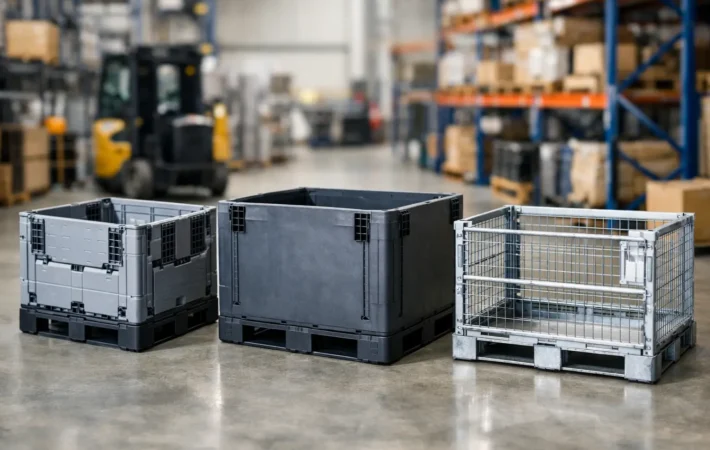
Finally, many buyers view the pallet as an isolated product, whereas in practice, it is part of a broader system. It must work correctly with boxes, containers, IBCs, racks, pallet jacks, and cleaning procedures. This holistic view leads to a safer and more efficient purchase.
How to make the right choice
To make the right decision, start with five key pieces of information: type of load, load weight and distribution, handling method, usage environment, and compliance needs. With these, you can quickly filter whether you need a lightweight export pallet, a heavy-duty multi-use pallet, a hygienic solution for food, or a pallet suitable for racking storage.
In an organized professional portfolio, such as Pack Markt’s, this choice becomes easier when products are categorized based on their application and technical characteristics. This helps the procurement manager compare not only prices but also actual suitability.
A plastic pallet is not a disposable item without significance. It is a critical link in the supply chain that affects safety, hygiene, speed, and cost. The clearer you define its usage conditions, the easier it will be to make a choice that will stand up in practice, not just on a technical brochure.

Leave a comment
Your email address will not be published. Required fields are marked *