


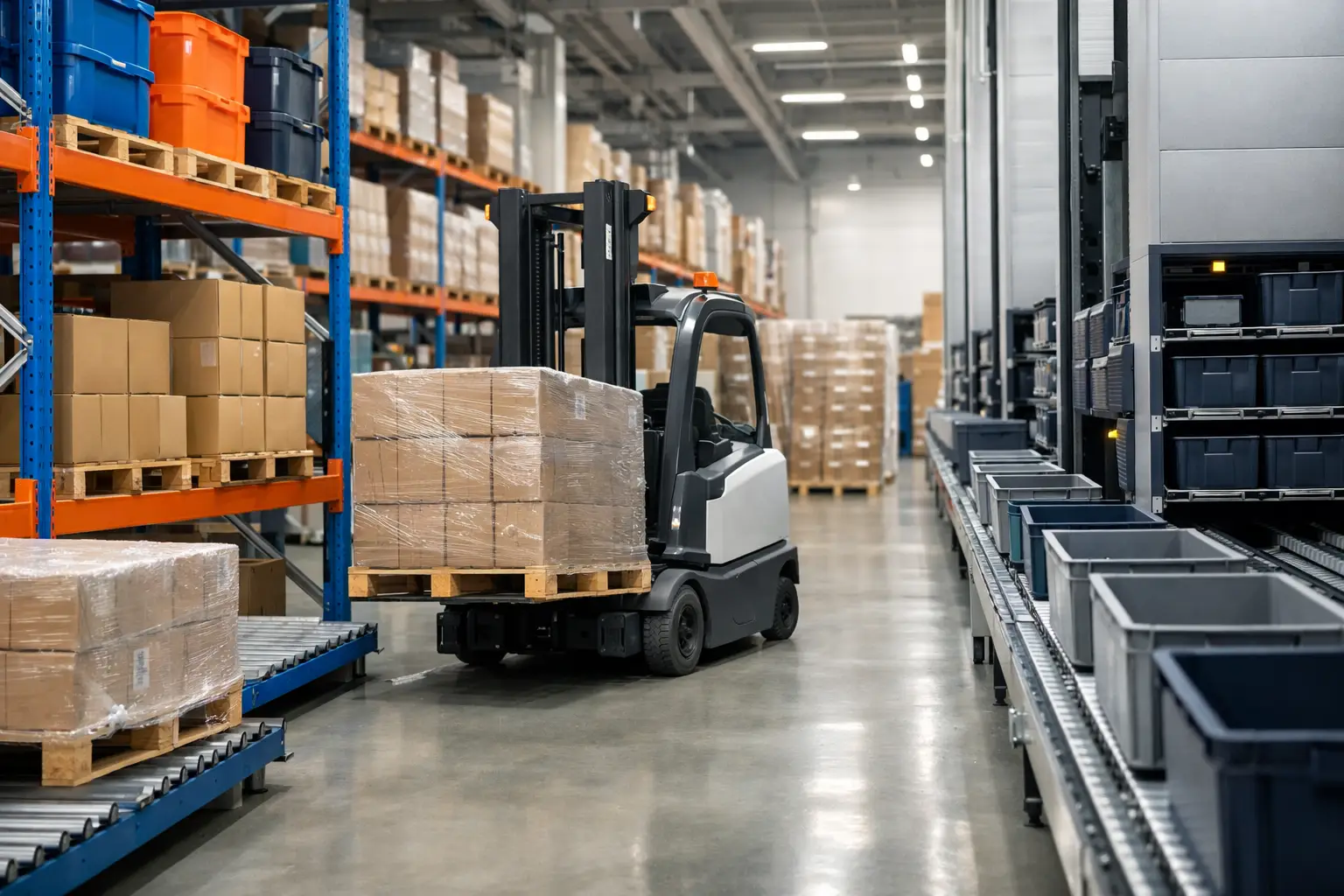
When a warehouse loses time due to mishandling, double transfers, and material damage, the problem is not merely spatial. It is operational. The right logistics storage solutions reduce delays, mitigate risks, and stabilize daily workflows in receiving, storage, picking, and shipping.
For a procurement manager or a warehouse manager, the choice is not solely determined by how many items a space can accommodate. It is determined by whether materials remain safe, access is fast, the storage medium withstands professional use, and it meets application specifications. This is even more true when discussing food, chemicals, lubricants, or heavy industrial handling.
What Logistics Storage Solutions Mean in Practice
In practice, logistics storage solutions are not a single product category. They are a combination of equipment and logical organization. They include pallets, pallet boxes, IBCs, drums, crates, storage boxes, metal cabinets, internal transport trolleys, and specialized containers per material or use.
The correct solution depends on four key factors: the load, the environment, handling frequency, and compliance requirements. A container suitable for dry material is not necessarily the right choice for liquids. A box that serves a retail backroom may not withstand the load of an industrial warehouse. And a cost-effective purchase option often costs more when it wears out quickly or leads to handling failures.
The Choice Starts with the Type of Load
Palletized and Bulky Loads
For products moved by forklift or pallet truck, stability is key. Pallets and pallet boxes must match the weight, dimensions, and stacking method. In high-turnover environments, material durability and dimensional consistency help ensure safe placement on shelves and reduce damage.
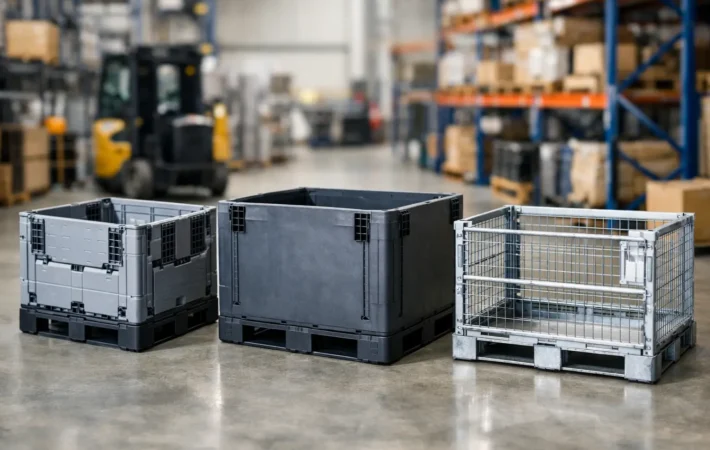
Pallet boxes are particularly useful when content protection is needed, not just base transport. For industrial components, raw materials, or agri-food products, they offer more controlled storage and better volume utilization. If frequent stacking is required, the static and dynamic load-bearing capacity must be considered, not just the nominal capacity.
Liquids, Chemicals, and Sensitive Contents
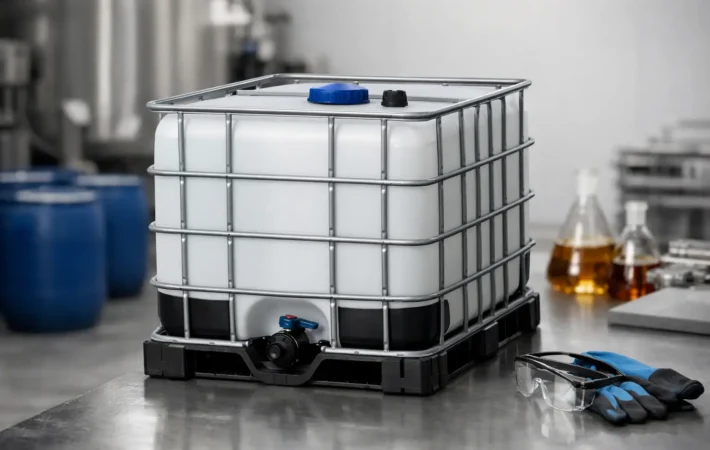
General solutions are not applicable here. For liquid products, chemicals, or lubricants, container selection must be based on material compatibility, closure security, ease of emptying, and transport requirements. IBCs, drums, and jerrycans offer different advantages depending on volume and use.
An IBC is practical for large quantities and organized handling, especially when a business wants better space utilization and controlled unloading. Drums serve demanding applications with increased durability, while jerrycans facilitate smaller storage and distribution units. Where UN certification or food-grade suitability is required, this is not an optional technical detail. It is a fundamental purchasing criterion.
Small Items, Components, and Frequent Picking
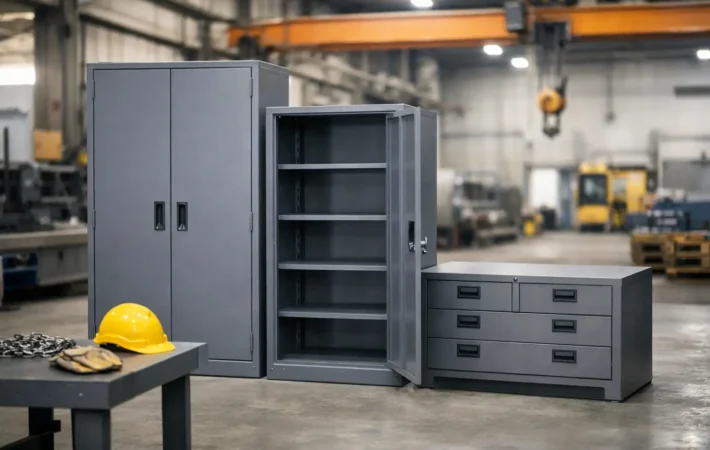
In warehouses with a large number of SKUs, the speed of locating items directly impacts productivity. Storage boxes, crates, and metal cabinets aid in clear classification, protection from dust or improper placement, and reduction of errors during picking.
The common mistake is to choose everything based on capacity. In reality, access, labeling capability, stacking resistance, and compatibility with shelves or trolleys are more important. When picking is daily and intensive, the ergonomics of the container are as valuable as its durability.
How the Environment Affects Storage
The same solutions do not fit everywhere. A dry indoor warehouse has different requirements than a space with humidity, washdowns, temperature fluctuations, or strict hygiene rules. In food and beverage businesses, priority is given to easily cleanable surfaces, contact suitability where required, and stable material performance in frequent use.
In chemical and industrial environments, the emphasis is more on chemical resistance, secure content isolation, and compliance with transport and storage specifications. There, a cheaper option without certifications can increase operational risk, complicate inspections, and burden the total cost of ownership.
Logistics Storage Solutions and Internal Transport
Storage does not operate in isolation. If the storage medium does not integrate with internal transport, delays occur at every step. This is why metal trolleys, correctly sized pallets, and containers that fit into a specific workflow are of great importance.
A container may be durable but unsuitable for fast transport. A trolley may carry the weight but not serve the route or maneuvering space. The correct approach is to examine the entire chain, from the receiving point to final loading. The fewer unnecessary transfers made, the less wear and tear on products and personnel.
What to Evaluate Before Procurement
The right solution choice begins with specific questions. How much weight will the product bear? Will it be stacked? Does it require food contact or chemical resistance? Will it be transported within the facility or externally? Is UN certification required? How often will cleaning be done? Is there a need for return and reuse?
If these answers are missing, purchasing becomes generic and often incorrect. For example, a low-cost box may seem advantageous initially, but if it cracks under repeated loading or does not stack stably, the problem shifts to daily operations. The same applies to liquid containers without the correct certification or material compatibility.
The Value of Standardization in the Warehouse
One of the most efficient moves for a business is to limit complexity. Standardization in basic pallet dimensions, specific box types, and selected containers for each workflow helps improve staff training, simplify replenishment, and reduce errors.
This does not mean everything has to be identical. It means that each material category must have the appropriate and repeatable solution. On an organized procurement platform like Pack Markt, this has practical value because the buyer can meet multiple storage, handling, and operational equipment needs with a unified selection logic.
When Low Purchase Cost Is Not Real Economy
In a B2B environment, initial cost is only one parameter. The true cost becomes apparent over time. If a product requires frequent replacement, delays handling, causes material losses, or fails to meet compliance checks, then a cheap purchase becomes expensive.
Durable storage solutions offer greater value when the usage cycle is intensive. The same applies to certified products for food, chemicals, and hazardous material transport. In these cases, the correct specification protects not only the product but also the operational continuity of the business.
What Is the Right Selection Approach?
The safest approach is to choose a solution per application, rather than generally per category. A food production unit has different needs, a 3PL operator has different needs, and a technical warehouse with spare parts has different needs. The common basis is the same: durability, safety, clear classification, proper handling, and compliance where required.
When these are correctly combined, the warehouse becomes more predictable. Flows become clear, errors are reduced, and inventory control becomes more reliable. This is the true role of proper logistics storage solutions in a business that aims to operate with stability and professional standards.
The best choice is not always the most complex. It is the one that precisely matches your load, environment, and operational pace.
Leave a comment
Your email address will not be published. Required fields are marked *